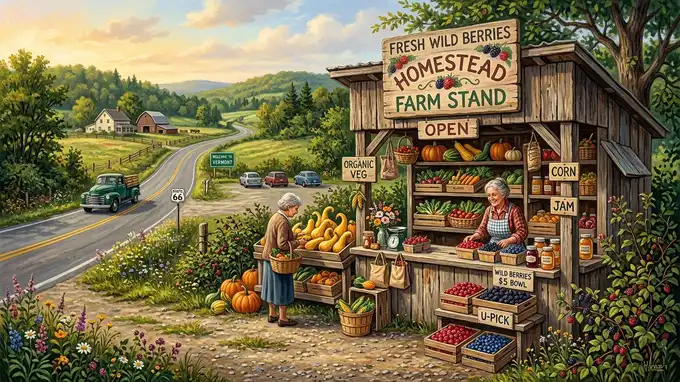
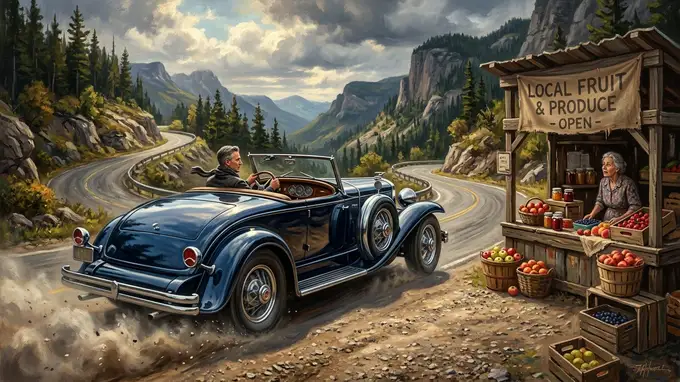
“A Roadside Stand” by four-time Pulitzer Prize-winning American poet Robert Frost (1874–1963) is a deeply compassionate, socially conscious critique of the glaring economic divide between wealthy urbanites and impoverished rural villagers. Set along a modern highway, the poem portrays a humble rural family that has erected a small, ramshackle roadside shed outside their farmhouse, displaying wild berries in wooden quarts and crook-necked squash with golden warts. They are not begging for charity or doles of bread; rather, they desperately plead for a small flow of “city money”—the lifeblood that sustains metropolitan prosperity—to afford a dignified standard of living. Frost directs blistering sarcasm at the speeding “polished traffic” that rushes past without a second glance, or stops only for petty complaints (such as signs with N and S turned wrong) or selfish convenience (turning cars around or asking for gas). He sharply exposes the corrupt nexus of politicians, real-estate promoters, and “greedy good-doers” who plan to herd rural folk into villages under false promises of leisure, effectively destroying their ancient independence. The poem ends on a note of intense personal heartbreak, with Frost lamenting his helplessness in alleviating rural misery.
🛣️ Why do thousands of luxury cars speed past a humble roadside shed without ever caring who lives inside?
Imagine standing all day at an open roadside window, praying for the squeak of car brakes, only to have wealthy drivers stop to ruin your grass while turning around or complain about the paint. In “A Roadside Stand,” Robert Frost delivers a blistering indictment of urban callousness, giving a heartbreaking voice to the forgotten rural poor.
Why This Chapter Matters
Prescribed as Poem 4 in NCERT Class 12 English (Flamingo), “A Roadside Stand” is celebrated for its searing socio-economic realism, biting irony, and intense human empathy. It tackles contemporary themes of uneven capitalist growth, rural neglect, and political exploitation. It is a frequent staple in board examinations for analyzing transferred epithets (“polished traffic”, “selfish cars”), oxymorons (“greedy good-doers”, “beneficent beasts of prey”), and Frost’s emotional conflict regarding rural suffering.
Before You Begin (Prerequisites)
Biographical context of Robert Frost’s deep connection to New England rural landscapes.
Economic divide between agrarian countryside and prosperous metropolitan centers.
Literary concepts: transferred epithet, oxymoron, personification, social satire.
What You Will Learn (Core Objectives)
Analyze the pathetic plea of the roadside stand: seeking economic dignity rather than charity.
Deconstruct the behavior of the “polished traffic”: indifference, aesthetic complaints, and selfish stops.
Examine the four specific, self-serving reasons why urban drivers occasionally stop at the stand.
Interpret the oxymoronic satire: “greedy good-doers” and “beneficent beasts of prey”.
Expose the deceptive promises of resettlement that soothe rural folk out of their self-reliant wits.
Evaluate the poet’s personal emotional crisis: the agonizing pain of childlike longing in vain.
Chapter Roadmap & Progression
11. The Humble Shed and The Pitiful...
22. The “Polished Traffic” & Superfi...
33. Four Selfish Reasons for Stoppin...
44. “Greedy Good-Doers” & The Poison...
55. Childlike Longing in Vain & The...
Complete Concept Guide (100% Curriculum Coverage)
1. The Humble Shed and The Pitiful Plea
The poem opens by describing a small, clumsy shed built out in front of an old farmhouse by the edge of a speeding highway. The roadside stand pleads pathetically for patronage: “It would not be fair to say for a dole of bread, / But for some of the money, the cash, whose flow supports / The flower of cities from sinking and withering faint.” The rural owners are not beggars; they seek honest commercial exchange to experience the prosperity promoted in moving pictures.
The humble rural plea: a little shed offering wild berries in wooden quarts and golden crook-necked squash.
2. The “Polished Traffic” & Superficial Complaints
Thousands of refined, wealthy city commuters in “polished traffic” speed past with their minds fixed strictly on distant urban destinations. If any driver ever turns their head to glance at the stand, it is solely with irritation:
They complain that the clumsy shed has “marred the landscape with artless paint,” or that the handmade signs with letters N and S turned wrong look rustic and unsightly. They notice superficial aesthetic flaws while remaining utterly blind to the human desperation behind the stall offering wild berries in wooden quarts and crook-necked golden squash.
The polished traffic: speeding past with minds ahead, oblivious to the heartbreaking rural wait for city cash.
3. Four Selfish Reasons for Stopping
Out of thousands of speeding vehicles, only a rare few ever pull over—and never to purchase farm produce:
1. Turning Around
To use the yard to back up and turn around, trampling and churning up the grass.
2. Asking Directions
To enquire which direction the highway leads or where a particular town is situated.
3. Demanding Gas
To demand crossly if the stand sells a gallon of gas—displaying arrogant blind stupidity.
4. “Greedy Good-Doers” & The Poison of False Charity
Frost unleashes venomous satire against corrupt social reformers and politicians:
“Beneficent beasts of prey”:
Self-serving promoters promise to herd rural families into clustered suburban villages near theaters and supermarkets, promising they will no longer have to think for themselves. In reality, these schemes rob villagers of their ancient self-reliance, “soothing them out of their wits” and teaching them to sleep all day while capitalists exploit their lands.
5. Childlike Longing in Vain & The Poet’s Anguish
The poem reaches an emotional crescendo as Frost confesses his unbearable pain: “I can’t help owning the great relief it would be / To put these people at one stroke out of their pain.” He suffers watching the shed owner wait with pathetic, childlike longing by the open window, praying all day for the squeak of brakes and the sound of a stopping car.
Yet Frost immediately catches himself: the next morning, returning to sanity, he wonders how he would feel if someone offered to put him out of his pain. He realizes that patronizing mercy or hasty destruction is not the answer—what is needed is genuine socioeconomic justice and respect for rural dignity.
Transfers human indifference and wealth onto the vehicles they drive.
Oxymoron: Greedy Good-Doers
“greedy good-doers” and “beneficent beasts of prey”
Exposes corrupt politicians and developers who disguise predatory exploitation as philanthropy.
Personification: The Roadside Stand
“A roadside stand that too pathetically pled...”
Invests the ramshackle wooden stall with human emotion and desperate pleading.
Economic Metaphor: City Money
Cash as the life-giving flow supporting “the flower of cities”.
Highlights the structural economic imbalance draining resources from village to metropolis.
Auditory Imagery: Squeak of Brakes
Waiting all day for the sound of tires and brakes stopping at the stand.
Captures the tense, heartbreaking hope of the impoverished rural vendors.
Ethical Paradox: The Poet’s Mercy
Wishing to end their pain at one stroke vs respecting the sanctity of rural life.
Demonstrates Frost’s acute emotional torment at witnessing unmitigated rural poverty.
Conceptual Solved Examples & Case Studies
Example 1
The city folk who drove through the countryside hardly paid any heed to the roadside stand or to the people who ran it. If at all they did, it was to complain. Which lines bring this out? What was their complaint? (Think it out)
Step-by-Step Solution:
Lines: “The polished traffic passed with mind ahead, / Or if ever aside a moment, then out of sorts / At having the landscape marred with the artless paint / Of signs that with N turned wrong and S turned wrong...”
Their Complaint: The city commuters did not care about the poverty or livelihood of the rural folk. Their sole grievance was aesthetic: they complained that the clumsy roadside shed with its unrefined paint ruined the picturesque scenic landscape, and that the handmade wooden signs with letters N and S painted backwards looked irritating and rustic.
Example 2
What was the plea of the folk who had put up the roadside stand? (Think it out)
Step-by-Step Solution:
The rural folk who erected the stand were not begging for charity or a dole of bread. Their plea was for honest commercial trade and a share of “city money”—the purchasing power that circulates through metropolitan areas and keeps urban businesses flourishing. They wanted to earn sufficient cash to improve their standard of living and experience the comfort promised by cinema and political parties.
Example 3
What is the “childish longing” that the poet refers to? Why is it “in vain”? (Think it out)
Step-by-Step Solution:
Childish Longing: It refers to the innocent, desperate hope of the roadside vendors who keep their windows open all day, praying listening for the squeak of car brakes and the sound of a stopping car coming to buy their goods.
Why it is in Vain: It is completely in vain because thousands of speeding cars pass by daily with total indifference. On the rare occasion a car stops, it is never to buy their berries or squash, but only to turn around, ask directions, or demand gasoline.
Example 4
Which lines tell us about the insincere kindness of the “good-doers”? What is their real agenda? (Think it out)
Step-by-Step Solution:
Lines: “While greedy good-doers, beneficent beasts of prey, / Swarm over their lives enforcing benefits / That are calculated to soothe them out of their wits...”
Real Agenda: The so-called benefactors (corrupt politicians and developers) plan to resettle rural families into compact villages near movie theatres and grocery stores under the guise of welfare. In reality, their agenda is predatory: by acquiring valuable countryside land, they rob the villagers of their traditional work ethic and self-reliance, making them docile dependents who sleep all day.
Example 5
What is the poet’s personal dilemma regarding the rural poor at the conclusion of the poem? (Think it out)
Step-by-Step Solution:
Frost experiences an intense, agonizing emotional conflict:
Witnessing the unceasing, pathetic struggle of the rural poor, he momentarily feels that it would be a merciful relief to end their misery at a single stroke.
However, returning to sober reflection the next day, he realizes that wishing death or total erasure upon them is irrational and horrifying. He wonders how he would feel if someone offered to take his life to relieve his anguish, concluding that true relief requires systemic justice, not nihilistic solutions.
Common Misconceptions & Examiner Traps
Common Misconception
Assuming the roadside stand vendors were begging for free donations.
Scientific Reality & Correction
Frost explicitly notes it would not be fair to say they begged for bread; they set up goods (berries, squash) to conduct honest trade.
Common Misconception
Thinking the “good-doers” actually help improve the villagers’ lives.
Scientific Reality & Correction
Frost calls them “greedy good-doers” and “beasts of prey” because their resettlement schemes destroy rural independence for political and financial gain.
Common Misconception
Believing Frost literally advocates killing the rural villagers.
Scientific Reality & Correction
Wishing to put them out of their pain is an expression of overwhelming emotional distress and despair, which he quickly retracts the next morning.
Chapter Summary & 10 Key Takeaways
Takeaway 1
The Roadside Shed: Humble stall pitched outside a farmhouse seeking city money to survive with dignity.
Takeaway 2
Speeding Indifference: Polished urban commuters rush past with minds fixed strictly on distant cities.
Takeaway 3
Aesthetic Complaints: Wealthy drivers grumble about artless paint and backward N and S signs.
Takeaway 4
Selfish Stops: Pulling over only to trample grass turning around, ask directions, or demand gas.
Takeaway 5
Predatory Benefactors: Politicians and developers plotting resettlement to soothe villagers out of their wits.
Takeaway 6
Childlike Longing in Vain: The heartbreaking wait by the open window for the squeak of brakes.
Takeaway 7
Frost’s Agony: Torn between the impulse to end their pain at one stroke and recognizing the sanctity of rural dignity.
Check Your Understanding (Diagnostic Practice Questions)
Diagnostic questions testing core conceptual clarity. Answers are hidden initially — solve each problem first, then click to reveal the step-by-step verified solution.
1
What two farm items were offered for sale at the roadside stand?
Reveal Answer & Explanation
Answer: Wild berries in wooden quarts and crook-necked golden squash. Wild berries and squash.
2
What poetic device is used in the phrase “polished traffic”?
Reveal Answer & Explanation
Answer: Transferred epithet. Transferred epithet.
3
What two oxymoronic phrases does Frost use to describe corrupt social reformers?
Reveal Answer & Explanation
Answer: “greedy good-doers” and “beneficent beasts of prey”. Greedy good-doers, beasts of prey.
4
Why does a driver stop and churn up the yard grass in the poem?
Reveal Answer & Explanation
Answer: To use the yard to back up and turn their car around. To turn the car around.
5
What sound do the roadside stand owners listen for with desperate hope all day?
Reveal Answer & Explanation
Answer: The squeak of brakes. Squeak of brakes.
Finished Studying This Chapter?
READY TO PRACTICE?
Timed CBT Practice Tests (Exam Simulator)
Put your concepts to the test with official curriculum-aligned Foundation and Advanced practice tests. Get instant accuracy scores, time metrics, and step-by-step verified explanations.