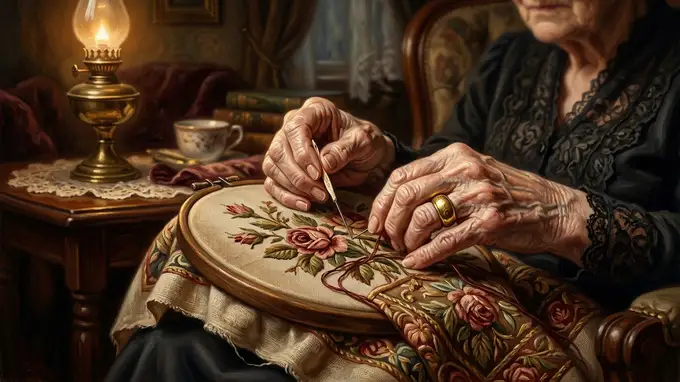
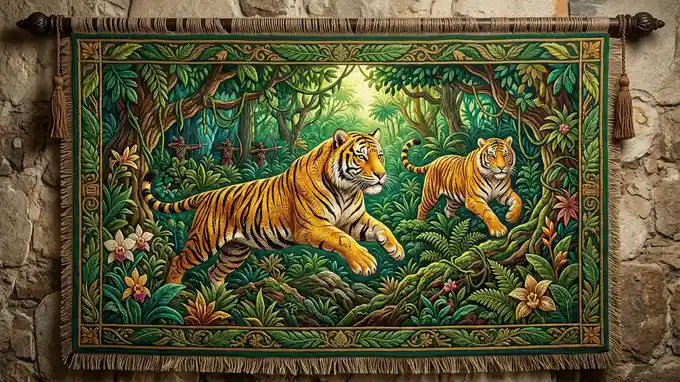
“Aunt Jennifer’s Tigers” by acclaimed American feminist poet, essayist, and activist Adrienne Rich (1929–2012) is a compact, powerfully subversive critique of patriarchal marriage and the institutional oppression of women. Consisting of three tightly constructed rhyming couplet stanzas (AABB), the poem contrasts the vibrant, fearless world of art with the tragic, crushed reality of the woman who creates it. In Stanza 1, Aunt Jennifer embroiders magnificent golden tigers that prance proudly across an ivory tapestry screen—fearless “denizens of a green world” possessing chivalric certainty. In Stanza 2, the scene shifts to the frail, trembling woman holding the needle: Aunt Jennifer’s terrified fingers flutter through the wool, finding even the light ivory needle nearly impossible to pull under “the massive weight of Uncle’s wedding band.” In Stanza 3, Rich projects forward to Aunt Jennifer’s death: even in the grave, her corpse will remain ringed with the patriarchal ordeals she was mastered by. Yet her art transcends her mortal subjugation—the magnificent tigers she created will go on prancing proud and unafraid forever.
🐅 Can a woman trapped in a silent cage of marriage create immortal beasts of pure freedom?
Imagine fingers so broken by decades of domestic terror that pulling an ivory needle feels like lifting a boulder, while the needlework creates golden tigers that leap across the fabric without fear of any man. In “Aunt Jennifer’s Tigers,” Adrienne Rich presents a fiery feminist masterpiece on how suppressed women achieve immortal defiance through art.
Why This Chapter Matters
Prescribed as the final poem of NCERT Class 12 English (Flamingo), this lyric is an indispensable feminist classic in modern world poetry. It deconstructs the traditional institution of marriage as an engine of female subjugation while demonstrating how creative expression serves as an enduring vehicle for suppressed female autonomy. It is one of the highest-yield poems in board exams for questions on symbolism (the tigers vs the wedding band), puns (“ringed”), and character contrast.
Before You Begin (Prerequisites)
Biographical context of Adrienne Rich and the 20th-century feminist literary movement.
Sociological understanding of patriarchal marriage and historical loss of female legal/personal identity.
1. The Screen: Chivalric Tigers of the Green World
The poem opens on a striking visual tapestry panel: “Aunt Jennifer’s tigers prance across a screen, / Bright topaz denizens of a green world.” The tigers are vivid, glowing like golden topaz gemstones against their emerald forest backdrop. They do not fear the men standing beneath the tree; instead, they move with “sleek chivalric certainty.” They embody supreme physical confidence, aristocratic nobility, and untamed masculine power—qualities completely denied to Aunt Jennifer herself.
2. The Fluttering Fingers & Uncle’s Wedding Band
The second stanza shifts from the bold tapestry to the tragic woman creating it: “Aunt Jennifer’s fingers fluttering through her wool / Find even the ivory needle hard to pull.” Her fingers tremble not from old age, but from deep-seated, chronic psychological terror and nervousness.
The Massive Weight of Marriage:
Rich delivers one of the most powerful lines in feminist poetry: “The massive weight of Uncle’s wedding band / Sits heavily upon Aunt Jennifer’s hand.” The wedding ring—traditionally a symbol of romantic love and union—is exposed as a crushing patriarchal shackle that has stripped Aunt Jennifer of her identity, autonomy, and voice.
The weight of subjugation: fluttering fingers finding even the ivory needle hard to pull under Uncle’s wedding band.
3. Death and the Ordeals of Subjugation
In the final stanza, the poet envisions Aunt Jennifer’s eventual death: “When Aunt is dead, her terrified hands will lie / Still ringed with ordeals she was mastered by.” Rich uses a brilliant pun on the word “ringed”: it refers literally to the wedding ring still encircling her cold corpse, and metaphorically to being surrounded, trapped, and permanently scarred by the patriarchal ordeals she suffered in life.
4. The Immortal Defiance of Art
The poem concludes with an exhilarating, immortal contrast between mortal frailty and artistic immortality:
“Proud and Unafraid”:
“The tigers in the panel that she made / Will go on prancing, proud and unafraid.” Though Aunt Jennifer will perish as a silenced, mastered victim of patriarchy, the vibrant tigers she created through needlework will endure forever. Her art serves as her permanent, unyielding rebellion against oppression—an eternal monument to the fearless spirit that lived buried within her soul.
Chivalric certainty: bright topaz denizens of a green world, prancing proud and unafraid forever.
The embroidered beasts represent the wild freedom and strength the creator was denied in life.
Feminist Symbol: Uncle’s Wedding Band
Massive weight sitting heavily on her hand.
Subverts the matrimonial symbol into an instrument of domestic subjugation and oppression.
Sensory Metaphor: Bright Topaz Denizens
Tigers glowing like golden topaz gemstones in a green forest.
Contrasts natural nobility and radiance against the drab reality of domestic abuse.
Somatic Imagery: Fluttering Fingers
Fingers trembling so violently that pulling a light ivory needle is difficult.
Depicts deep physical manifestations of psychological intimidation and marital trauma.
Literary Pun: “Ringed with ordeals”
Literal wedding ring on finger + Metaphorically encircled by domestic ordeals.
Highlights that patriarchal subjugation clings to her even beyond the grave.
Aesthetic Triumph: Immortality of Art
The mortal creator dies; the creation prances proud and unafraid forever.
Art acts as the ultimate vehicle of repressed female defiance and immortality.
Conceptual Solved Examples & Case Studies
Example 1
How do “denizens” and “chivalric” add to our understanding of the tiger’s attitudes? (Think it out)
Step-by-Step Solution:
Denizens: The word “denizens” means natural citizens or inhabitants of a particular place. Calling the tigers “denizens of a green world” emphasizes that they are proud, legitimate rulers of the forest who belong completely to nature, untamed and unburdened by artificial social constraints.
Chivalric: “Chivalric” evokes medieval knighthood, aristocratic honor, bravery, and courtly confidence. Describing the tigers as possessing “sleek chivalric certainty” shows that they move with supreme, fearless majesty, utterly indifferent to the men standing beneath the trees.
Example 2
Why do you think Aunt Jennifer’s hands are “fluttering through her wool” in the second stanza? Why is she finding the needle so hard to pull? (Think it out)
Step-by-Step Solution:
Aunt Jennifer’s hands are fluttering not from physical weakness or illness, but from deep-seated emotional trauma and psychological intimidation:
She has spent decades living in silent terror under her husband’s tyrannical, overbearing dominance.
The ivory needle is physically weightless, yet it feels impossibly heavy because she is crushed by the invisible, suffocating atmosphere of domestic oppression. Her trembling fingers reflect a spirit thoroughly broken by marital servitude.
Example 3
What is suggested by the image “massive weight of Uncle’s wedding band”? (Think it out)
Step-by-Step Solution:
The “massive weight of Uncle’s wedding band” is a brilliant, subversive feminist metaphor:
A wedding ring is physically a tiny, lightweight circle of metal. However, Rich terms it “massive” because it represents the crushing, lifelong burden of patriarchal domination and the total loss of Aunt Jennifer’s individual identity.
The band is explicitly called “Uncle’s”—signifying that marriage in patriarchal society is an institution owned and controlled by men, reducing the wife to an oppressed possession.
Example 4
Of what or of whom is Aunt Jennifer terrified with in the third stanza? (Think it out)
Step-by-Step Solution:
Aunt Jennifer is terrified of the tyrannical authority of her husband (Uncle) and the inescapable ordeals of patriarchal subjugation that have governed her entire married life. Even when contemplating death, the poet notes her “terrified hands”, revealing that decades of domestic intimidation have scarred her subconscious mind so deeply that not even the grave offers immediate psychological release.
Example 5
What are the “ordeals” Aunt Jennifer is surrounded by, why is it significant that the poet uses the word “ringed”? What are the meanings of the word “ringed” in the poem? (Think it out)
Step-by-Step Solution:
The Ordeals: The ordeals encompass years of domestic enslavement, emotional suppression, fear of her husband’s displeasure, and the total erasure of her creative voice.
Significance of “Ringed” (Pun): Rich employs a deliberate double entendre:
Literal Meaning: Her fingers remain encircled by Uncle’s physical wedding ring even in the coffin.
Metaphorical Meaning: She has spent her life trapped, encircled, and imprisoned by patriarchal domestic traps from which she could never break free.
Example 6
Why do you think Aunt Jennifer created animals that are so different from her own character? What does this choice of art reveal about her? (Think it out)
Step-by-Step Solution:
Aunt Jennifer embroiders fearless, chivalric tigers because they represent her deepest, suppressed longing for freedom, courage, and autonomy:
In her daily life, Aunt Jennifer is timid, oppressed, and silenced. Unable to rebel openly against her tyrannical husband, she channels her inner strength and desire for liberation into her tapestry.
The tigers are her spiritual alter-ego—bold, proud, and unafraid of men. Her choice of art proves that despite decades of marital subjugation, her inner desire for dignity and freedom was never completely extinguished.
Common Misconceptions & Examiner Traps
Common Misconception
Assuming Aunt Jennifer’s fingers flutter because she is sick or elderly.
Scientific Reality & Correction
Her fingers flutter due to the psychological nervousness and deep-seated trauma caused by her husband’s tyrannical dominance.
Common Misconception
Believing Uncle is dead in the poem.
Scientific Reality & Correction
Uncle is alive and dominates her household; the poem refers to his overbearing presence through the symbol of his wedding band.
Common Misconception
Thinking the tigers die when Aunt Jennifer dies.
Scientific Reality & Correction
The poem explicitly concludes that the tigers on the tapestry panel will go on prancing proud and unafraid forever, outliving her mortal subjugation.
Chapter Summary & 10 Key Takeaways
Takeaway 1
Topaz Tigers: Golden embroidered beasts prancing proudly across a green tapestry screen with chivalric certainty.
Takeaway 2
Fearless Animals: The tigers are completely unafraid of the men standing beneath the trees.
Takeaway 3
Fluttering Fingers: Aunt Jennifer’s traumatized hands tremble as she struggles to pull a lightweight ivory needle.
Takeaway 4
Uncle’s Wedding Band: Metaphor for the crushing psychological burden of patriarchal marriage and loss of female selfhood.
Takeaway 5
Ringed in Death: Even in the grave, her corpse will remain encircled by the domestic ordeals that mastered her.
Takeaway 6
The Triumph of Art: Her mortal body perishes, but the proud, fearless tigers she created will prance forever in immortal defiance.
Check Your Understanding (Diagnostic Practice Questions)
Diagnostic questions testing core conceptual clarity. Answers are hidden initially — solve each problem first, then click to reveal the step-by-step verified solution.
1
What gemstone are Aunt Jennifer’s tigers compared to in the opening stanza?
What pun does the poet use in the final stanza regarding Aunt Jennifer’s hands?
Reveal Answer & Explanation
Answer: “Ringed” (referring both to wearing the wedding ring and being surrounded by ordeals). Ringed.
5
What will the tigers in the panel continue to do after Aunt Jennifer is dead?
Reveal Answer & Explanation
Answer: They will go on prancing, proud and unafraid. Prancing, proud and unafraid.
Finished Studying This Chapter?
READY TO PRACTICE?
Timed CBT Practice Tests (Exam Simulator)
Put your concepts to the test with official curriculum-aligned Foundation and Advanced practice tests. Get instant accuracy scores, time metrics, and step-by-step verified explanations.