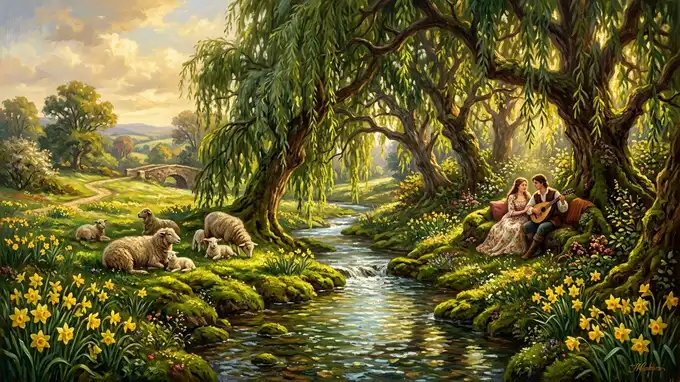
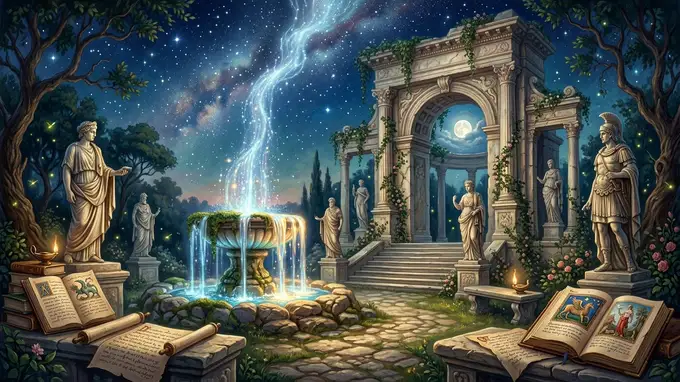
“A Thing of Beauty” by premier British Romantic poet John Keats (1795–1821) is an excerpt from his epic poem “Endymion: A Poetic Romance” (1818), inspired by the classical Greek myth of the shepherd youth beloved by the Moon Goddess Cynthia. Keats opens with one of the most famous axioms in world literature: “A thing of beauty is a joy forever.” He asserts that true aesthetic beauty possesses an eternal, immortal quality—its loveliness continually multiplies with time and never dissolves into nothingness. Amidst the existential hardships of human existence—despondence, the painful dearth of noble souls, gloomy days, and the darkness of human despair—beauty acts as a celestial sanctuary (a “quiet bower”). It weaves an invisible “flowery band” that anchors our wounded spirits to the earth. Cataloging the timeless treasures of nature—the sun, moon, old and young trees, daffodils, clear streams, musk-roses, and the heroic tales of the mighty dead—Keats crowns beauty as an “endless fountain of immortal drink” poured directly onto humanity from the brink of heaven.
🌸 Can a single glimpse of beauty heal a soul broken by sorrow and despair?
In a world darkened by grief, cynicism, and human cruelty, where do we find the courage to keep living? In “A Thing of Beauty,” John Keats reveals that true beauty is not a fleeting cosmetic illusion, but an eternal, divine nectar that washes away the dark pall of sorrow and permanently elevates the human spirit.
Why This Chapter Matters
Prescribed as Poem 3 in NCERT Class 12 English (Flamingo), this lyric is an indispensable masterpiece of Romantic philosophy and aesthetic transcendentalism. It teaches students to discover emotional solace, spiritual renewal, and resilience in nature and noble art. It is a frequent staple in board examinations for identifying poetic devices (metaphor, imagery, alliteration), analyzing Keats’s concept of the “flowery band,” and explaining the “grandeur of the dooms” of the mighty dead.
Before You Begin (Prerequisites)
Biographical context of John Keats and the core tenets of the English Romantic Movement.
Classical mythology: Endymion and Cynthia (the Moon Goddess).
Deconstruct the central thesis: why a thing of beauty provides eternal, increasing joy rather than fading away.
Analyze the metaphor of the “quiet bower” and the “flowery band” that binds mortals to the sorrowful earth.
Examine the existential afflictions cataloged by Keats: despondence, dearth of noble natures, gloomy days.
Evaluate the physical and spiritual manifestations of beauty: daffodils, clear rills, musk-roses, and shady boons.
Interpret the sublime paradox: discovering beauty in the “grandeur of the dooms” of the mighty dead.
Appreciate Keats’s crowning metaphor: beauty as an “endless fountain of immortal drink” from heaven.
Chapter Roadmap & Progression
11. The Eternal Nature of Beauty: A...
22. The Flowery Band & The Darkness...
33. The Catalog of Natural Wonders
44. Grandeur of the Dooms & The Immo...
Complete Concept Guide (100% Curriculum Coverage)
1. The Eternal Nature of Beauty: A Joy Forever
Keats commences with an immortal philosophical proclamation: “A thing of beauty is a joy forever: / Its loveliness increases; it will never / Pass into nothingness.” Unlike material commodities that lose value or decay with time, genuine aesthetic beauty is immortal. Its impact upon the human soul deepens across memory, leaving a lasting imprint of joy.
The Quiet Bower:
Beauty provides a “bower quiet for us”—a shady, peaceful retreat that offers restful sleep filled with sweet dreams, physical health, and quiet, calm breathing, shielding the soul from the turbulent anxieties of mortal life.
2. The Flowery Band & The Darkness of Existence
Keats acknowledges the grim reality of human existence without romantic illusion. Life is burdened by despondence, the “inhuman dearth of noble natures” (scarcity of truly virtuous and selfless human beings), gloomy days, and unhealthy ways. Yet, despite this sorrow, every morning humanity weaves a “flowery band to bind us to the earth.” Beauty reconnects us to existence, preventing humanity from sinking into nihilistic despair.
3. The Catalog of Natural Wonders
Keats paints a sensuous catalog of natural wonders that remove the heavy pall of gloom from our spirits:
Sun, Moon & Trees
The sun, the moon, and trees old and young sprouting a protective, shady boon for gentle sheep, offering pastoral comfort.
Daffodils & Clear Rills
Bright yellow daffodils flourishing in their green world; sparkling mountain streams (rills) creating cooling shelter against summer heat.
A joy forever: a bower quiet for us, full of sweet dreams, daffodils, and clear rills cooling the earth.
4. Grandeur of the Dooms & The Immortal Fountain
Keats elevates beauty beyond nature into the realm of human legacy: “the grandeur of the dooms / We have imagined for the mighty dead.” The heroic, sacrificial deaths of great ancestors and martyrs inspire awe and sublimity, as do all the lovely tales heard or read in literature and history.
An Endless Fountain of Immortal Drink:
In a magnificent closing vision, Keats declares all forms of beauty to be an “endless fountain of immortal drink”—a divine, celestial elixir poured continuously from heaven’s brink onto mortal human souls, bestowing spiritual immortality upon those who embrace it.
Grandeur of the dooms: the endless fountain of immortal drink pouring unto us from the brink of heaven.
“A thing of beauty is a joy forever: / Its loveliness increases; it will never / Pass into nothingness.”
Keats’s core Romantic philosophy: beauty is an eternal spiritual constant.
Metaphor: The Quiet Bower
Beauty as a shady sanctuary offering peaceful rest and sweet dreams.
Symbolizes psychological refuge from the heat and stress of daily existence.
Metaphor: The Flowery Band
Floral garland binding mortal hearts to the suffering earth.
Represents beauty acting as an emotional anchor preserving our desire to live.
Sublime Paradox: Grandeur of the Dooms
Finding profound aesthetic grandeur in the tragic deaths of heroic ancestors.
Sublime literature and heroic sacrifice transcend mortal tragedy into beauty.
Alliteration: Cooling Covert & Simple Sheep
“cooling covert” and “simple sheep”
Musical phonetic devices enhancing the soothing, pastoral atmosphere of the verse.
Celestial Metaphor: Immortal Fountain
“An endless fountain of immortal drink, / Pouring unto us from the heaven’s brink.”
Depicts beauty as divine grace descending from heaven to nourish mortal souls.
Conceptual Solved Examples & Case Studies
Example 1
List the things of beauty mentioned in the poem. (Think it out)
Step-by-Step Solution:
John Keats catalogs an exquisite variety of beautiful things from nature, literature, and history:
Celestial Bodies: The radiant sun and the luminous moon.
Pastoral Vegetation: Trees old and young that sprout a shady boon for innocent sheep.
Floral Splendor: Bright yellow daffodils living amidst their lush green world, and mid-forest brakes adorned with blooming musk-roses.
Streams: Clear mountain rills that carve out a cooling covert against the scorching hot season.
Heroic Legacy & Literature: The inspiring grandeur associated with the mighty dead, and all the noble, immortal tales we have ever heard or read.
Example 2
List the things that cause suffering and pain in the poem. (Think it out)
Step-by-Step Solution:
Keats honestly highlights several existential sources of human pain and anguish:
Despondence: Deep sadness, disappointment, and mental depression.
Inhuman Dearth of Noble Natures: The agonizing scarcity of genuinely virtuous, noble, and selfless people in society.
Gloomy Days: Dreary, cheerless periods filled with pessimism and grief.
Unhealthy and O’er-darkened Ways: Evil, corrupt, and misguided paths that human beings pursue, bringing suffering upon themselves and others.
Example 3
What does the line, “Therefore, on every morrow, are we wreathing a flowery band to bind us to the earth” suggest to you? (Think it out)
Step-by-Step Solution:
This line conveys the profound idea that beauty serves as our vital psychological anchor to life:
Despite the suffering, treachery, and grief inherent in the human condition, our daily encounter with beauty acts like a fragrant, woven garland that binds our spirits to the earth.
Without the restorative power of natural and artistic beauty, human existence would become unbearable, leading to despair. Beauty continually renews our will to live.
Example 4
What makes human beings love life in spite of troubles and sufferings? (Think it out)
Step-by-Step Solution:
Human beings love life despite sorrow because “some shape of beauty moves away the pall from our dark spirits.” Whenever grief, despondence, or loss threaten to crush our soul, an encounter with nature (a clear stream, blooming roses, a sunrise) or an inspiring heroic tale lifts the dark shroud of depression, refilling our hearts with peace, sweet dreams, and renewed hope.
Example 5
Why is “grandeur” associated with the “mighty dead”? (Think it out)
Step-by-Step Solution:
The “mighty dead” refers to our heroic ancestors, martyrs, and visionary leaders who sacrificed their lives for noble causes. Their “grandeur” lies in the sublime moral dignity of their deeds and monumental legacies. When we imagine their glorious dooms and read of their heroic sacrifices, their memory acts like a beacon of beauty, inspiring courage and elevating the human spirit beyond mundane existence.
Common Misconceptions & Examiner Traps
Common Misconception
Believing Keats claims beauty fades away as time passes.
Scientific Reality & Correction
Keats explicitly asserts the exact opposite: beauty’s loveliness increases with time and will never pass into nothingness.
Common Misconception
Thinking the “mighty dead” refers to military conquerors who killed people.
Scientific Reality & Correction
It refers to noble martyrs, heroes, and cultural giants whose lives and sacrificial deaths inspire reverence and awe.
Common Misconception
Confusing the “cooling covert” with an air conditioner or artificial shelter.
Scientific Reality & Correction
It refers to the natural shade and cooling environment created by clear streams (rills) and bushes during summer.
Chapter Summary & 10 Key Takeaways
Takeaway 1
A Joy Forever: Beauty is an immortal essence whose loveliness multiplies and never passes into nothingness.
Takeaway 2
The Quiet Bower: Beauty offers a peaceful sanctuary of health, restful sleep, and tranquil breathing.
Takeaway 3
The Human Ordeal: Life is burdened by despondence, gloomy days, and the scarcity of noble souls.
Takeaway 4
The Flowery Band: Daily encounters with beauty weave an anchor binding our spirits to the earth.
Takeaway 5
Natural Treasures: Sun, moon, shady trees for sheep, daffodils, clear rills, and musk-rose blossoms.
Takeaway 6
The Mighty Dead: Discovering sublime grandeur in the heroic sacrifices and inspiring literature of ancestors.
Takeaway 7
Immortal Drink: Beauty as a divine celestial nectar poured from heaven’s brink onto mortal human souls.
Check Your Understanding (Diagnostic Practice Questions)
Diagnostic questions testing core conceptual clarity. Answers are hidden initially — solve each problem first, then click to reveal the step-by-step verified solution.
1
Complete the famous opening line: “A thing of beauty is a ______ forever”.
Reveal Answer & Explanation
Answer: joy. A joy forever.
2
What metaphorical band does humanity wreathe every morning to bind itself to the earth?
Reveal Answer & Explanation
Answer: A flowery band. Flowery band.
3
What do the clear rills create for themselves against the scorching hot season?
Reveal Answer & Explanation
Answer: A cooling covert. Cooling covert.
4
What kind of rose blooms amid the mid-forest brake in the poem?
Reveal Answer & Explanation
Answer: Musk-rose. Musk-rose.
5
From where is the “endless fountain of immortal drink” poured unto mortals?
Reveal Answer & Explanation
Answer: From the heaven’s brink. Heaven’s brink.
Finished Studying This Chapter?
READY TO PRACTICE?
Timed CBT Practice Tests (Exam Simulator)
Put your concepts to the test with official curriculum-aligned Foundation and Advanced practice tests. Get instant accuracy scores, time metrics, and step-by-step verified explanations.