“The Interview” is a two-part analytical text exploring the modern journalistic phenomenon of the interview. Part I, excerpted from the Introduction to Christopher Silvester’s “The Penguin Book of Interviews,” charts the 130-year history of the medium, examining the starkly polarized attitudes toward it. While journalists praise it as an unparalleled vehicle of truth and human intimacy, world-renowned literary figures have vehemently condemned it as an intrusive assault, an ordeal, or an act of spiritual theft—from Lewis Carroll’s horror of being lionized and Rudyard Kipling’s denunciation of it as “immoral and cowardly,” to H.G. Wells’s uneasy encounters and Saul Bellow’s description of interviews as “thumbprints on his windpipe.” Part II presents an illuminating real-world interview conducted by Mukund Padmanabhan of “The Hindu” with the celebrated Italian semiotician, philosopher, and novelist Umberto Eco. Eco candidly unpacks his intellectual philosophy, his mastery of “interstices” (empty time intervals), and the baffling global bestseller status of his medieval scholarly mystery novel “The Name of the Rose.”
🎙️ Is an interview the ultimate window to truth, or does it steal a piece of your soul?
Why did legendary authors like Rudyard Kipling and Lewis Carroll view the interview as a criminal assault, while modern culture treats it as our primary source of truth? In “The Interview,” Christopher Silvester and Umberto Eco take us behind the microphone to explore the psychology of fame, the secret of working in “empty spaces,” and why a dense medieval novel sold 15 million copies.
Why This Chapter Matters
Prescribed as Chapter 7 of NCERT Class 12 English (Flamingo), “The Interview” provides essential exposure to non-fiction media writing, critical discourse analysis, and higher-order literary theory. It contrasts celebrity anxieties with journalistic ethics while offering profound pedagogical insights through Umberto Eco’s intellectual time-management techniques. It is a frequent source for board exam questions on celebrity reactions to interviews, the concept of “interstices,” and the literary phenomenon of “The Name of the Rose.”
Before You Begin (Prerequisites)
History of journalism and 19th-20th century print media evolution.
Trace the 130-year evolution of the interview as a primary medium of modern communication.
Analyze the fierce resistance of literary figures (Kipling, Carroll, Bellow) toward journalistic intrusion.
Contrast the primitive fear of soul-theft with modern celebrity fears of misrepresentation.
Deconstruct Umberto Eco’s philosophy of time: working in the “interstices” (empty gaps of life).
Examine Eco’s self-identity: an academic university professor who writes novels only on Sundays.
Investigate the unexpected publishing phenomenon of Eco’s novel “The Name of the Rose”.
Chapter Roadmap & Progression
11. The History & Polarized Perspect...
22. Literary Hostility: From Kipling...
33. Umberto Eco: The Academic Who Wr...
44. The Secret of Productivity: Work...
55. Narrative Tone in Scholarly Writ...
66. The Enigma of “The Name of the R...
Complete Concept Guide (100% Curriculum Coverage)
1. The History & Polarized Perspectives on the Interview
Since its invention over 130 years ago, the interview has become an omnipresent feature of modern journalism. Today, almost every literate person has read an interview, and thousands of celebrities have been interviewed repeatedly. Yet, opinions regarding its functions and virtues vary dramatically.
The Proponents’ View
Advocates view the interview as the highest vehicle of truth, communication, and contemporary history. In its highest form, it is an art; as Denis Brian remarked, “Almost everything of moment reaches us through one man asking questions of another.”
The Celebrities’ Grievance
Many public figures look upon the interview as an unjustified intrusion into their private lives, feeling that it somehow diminishes them—echoing primitive folklore that having one’s portrait drawn or photo taken steals a part of one’s soul.
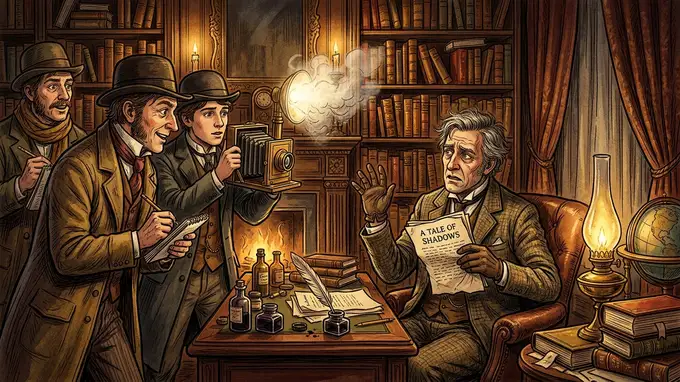
2. Literary Hostility: From Kipling to Saul Bellow
Part I documents the fierce revulsion voiced by celebrated literary titans against the interview:
Lewis Carroll: The creator of Alice in Wonderland had a passionate horror of being “lionized” (treated as a celebrity). He rigorously refused all interviews, fearful that it would destroy his privacy.
Rudyard Kipling: Expressed utter contempt, calling interviewing “immoral, a crime, an assault on the person, cowardly and vile,” arguing no respectable man would ask or answer questions (though he ironically interviewed Mark Twain years earlier!).
H.G. Wells: Regularly termed the interview an “ordeal,” yet frequently sat for interviews and even questioned Joseph Stalin in 1934.
Saul Bellow: The Nobel laureate once vividly compared interviews to feeling like “thumbprints on his windpipe.”
The celebrity’s ordeal: 19th-century authors like Kipling and Carroll viewed the interview as an assault and violation of privacy.
3. Umberto Eco: The Academic Who Writes Novels on Sundays
Part II features an interview conducted by Mukund Padmanabhan of The Hindu with Umberto Eco, distinguished Professor of Semiotics at the University of Bologna, Italy. Eco had already produced a formidable body of scholarly work on literary theory, medieval aesthetics, and semiotics (the study of signs) before suddenly penning fiction.
A University Professor at Heart:
When Padmanabhan points out that the global public knows him primarily as a novelist, Eco gently corrects him. He insists that he considers himself an academic university professor who merely writes novels on Sundays. He participates in academic conferences, not pen clubs, and has published over 40 scholarly non-fiction works compared to just five novels.
A philosopher among manuscripts: Professor Umberto Eco at Bologna, the academic who wrote bestselling fiction on Sundays.
4. The Secret of Productivity: Working in the “Interstices”
When asked how he manages to produce such an astounding volume of scholarly and creative output, Eco reveals a profound, practical philosophical method:
Eliminating the Empty Spaces (Interstices):
Eco explains that our lives are filled with interstices—vacant time intervals. “You are coming up in an elevator to my third-floor apartment,” Eco illustrates. “While you travel upward, I am waiting for you. That is an interstice—an empty space. Instead of idling, I have already written an article while waiting for your elevator!”
5. Narrative Tone in Scholarly Writing
Eco notes that standard academic research tends to be impersonal, dry, and artificial—presenting hypotheses and conclusions while hiding the false starts and trial-and-error. In contrast, Eco tells the narrative story of his research, complete with mistakes and intellectual adventures. This narrative style made his transition from academic essays to fiction natural and seamless.
6. The Enigma of “The Name of the Rose”
In 1980, Eco published “The Name of the Rose,” a complex medieval detective mystery blending theology, metaphysics, Aristotle’s lost treatise on comedy, and historical crime. His American publisher estimated that in a country where nobody had seen a cathedral or studied Latin, it might sell 3,000 copies. Instead, it became an unprecedented global phenomenon, selling between 10 and 15 million copies worldwide.
A Mystery Beyond Explanation:
When asked why a difficult, intellectual novel about medieval history succeeded so wildly when modern culture prefers easy trash, Eco replies that it is a mystery. Had it been published ten years earlier or ten years later, it might not have resonated. The unpredictable success proves that readers are far more intellectually curious and hungry for challenging literature than cynical commercial publishers believe.
Eliminating wasted time gaps (interstices) between daily activities.
Umberto Eco’s secret to authoring 40+ academic treatises and global bestselling novels.
Primitive Folklore: Soul Theft
Belief that taking a portrait or photograph steals a portion of one’s soul.
Used by Christopher Silvester as a metaphor for celebrity fear of invasive interviews.
Literary Metaphor: “Thumbprints on Windpipe”
Saul Bellow’s description of the suffocating pressure of media interviews.
Highlights the emotional and psychological exhaustion experienced by creative authors.
Narrative Academic Pedagogy
Presenting scholarly research as an engaging narrative story of discovery.
Eco’s method of making complex medieval semiotics accessible and conversational.
Publishing Paradox: The Name of the Rose
A dense medieval theological mystery selling 15 million copies vs anticipated 3,000.
Shatters the media myth that modern mass audiences exclusively consume mindless pulp.
Dual Intellectual Identity
University Professor on weekdays | Novelist on Sundays.
Eco’s balance between serious scholarly academia and accessible fictional storytelling.
Conceptual Solved Examples & Case Studies
Example 1
What are some of the positive views on interviews presented in the text? (Think as you read)
Step-by-Step Solution:
The text presents several compelling positive arguments for interviews:
Supreme Vehicle of Truth: In its highest journalistic execution, an interview serves as an authentic, direct, and unvarnished source of contemporary truth.
Art and Communication: It is an indispensable art form through which people communicate their core philosophies and personalities.
Denis Brian’s Verdict: The interviewer holds unprecedented power and influence because almost all significant knowledge about major contemporary figures reaches the public through “one man asking questions of another.”
Example 2
Why do most celebrity writers despise being interviewed? (Think as you read)
Step-by-Step Solution:
Celebrity writers despise interviews for several psychological reasons:
Invasion of Privacy: They view the interview as an aggressive, unwarranted trespass into their intimate personal sanctuary.
Sense of Diminishment: They feel that being dissected by interviewers wounds their dignity, resembling primitive folklore where having a portrait made steals a piece of one’s soul.
Sensational Distortion: Interviewers often twist words, reducing complex intellectual thoughts into superficial soundbites. Authors like Saul Bellow felt choked, describing interviews as “thumbprints on his windpipe.”
Example 3
What is the belief in some primitive cultures about being photographed? (Think as you read)
Step-by-Step Solution:
In certain primitive cultures, it is believed that if someone takes a photographic portrait of you, they are essentially stealing a part of your soul. Christopher Silvester uses this anthropological belief to explain why modern celebrities instinctively recoil from intrusive media interviews, feeling that the process depletes their spiritual individuality.
Example 4
What was Lewis Carroll’s attitude towards interviews? What was Rudyard Kipling’s stance? (Think as you read)
Step-by-Step Solution:
Lewis Carroll: Carroll had a passionate, lifelong horror of being “lionized” (treated with celebrity adulation). He vehemently refused all interview requests, autograph hunters, and admirers, cherishing his quiet anonymity as an Oxford don.
Rudyard Kipling: Kipling condemned the interview in the fiercest moral terms, calling it “immoral, a crime, an assault on the person, and cowardly and vile.” He maintained that no respectable gentleman would ever consent to be interviewed (though he had ironically interviewed Mark Twain years earlier).
Example 5
How does Umberto Eco find time to write so much? What is his concept of “interstices”? (Think as you read)
Step-by-Step Solution:
Umberto Eco manages his prodigious literary and academic output through his mastery of “interstices”—the small, empty intervals of time that exist in everyone’s daily life. Eco illustrates this by explaining that while an interviewer is taking an elevator up from the ground floor to his third-floor apartment, those sixty seconds represent an empty interstice. Instead of waiting idly, Eco utilizes that brief window to write an article or draft a concept. By capturing and filling these fragmented gaps of time, he achieves extraordinary productivity.
Example 6
What did Umberto Eco consider himself first: an academic scholar or a novelist? Why? (Think as you read)
Step-by-Step Solution:
Umberto Eco explicitly considered himself an academic scholar and university professor first, and a novelist only secondarily. He explains:
He spent his entire career teaching semiotics at the University of Bologna and participating in academic seminars, not literary pen clubs.
He published over forty scholarly, non-fiction treatises on semiotics and philosophy, compared to writing only five novels.
He took up fiction writing late in life (at age 50) and wrote novels strictly “on Sundays” as an intellectual relaxation.
Example 7
What is the reason for the huge success of the novel “The Name of the Rose”? (Understanding the text)
Step-by-Step Solution:
While publishers initially predicted The Name of the Rose would fail because modern audiences supposedly demand trivial entertainment, the novel sold over 10 to 15 million copies worldwide. Eco explains:
Intellectual Depth: It was a captivating detective mystery that also explored profound medieval history, metaphysics, and theology, satisfying readers who crave challenging literature.
Unpredictable Timing: Eco admits that the timing was an inscrutable mystery. Had the novel appeared ten years earlier or ten years later, it might not have resonated. Its runaway success proved that readers are far more intellectually curious than cynical commercial publishers assume.
Common Misconceptions & Examiner Traps
Common Misconception
Assuming Umberto Eco started as a professional fiction writer before becoming a professor.
Scientific Reality & Correction
Eco was a renowned professor of semiotics who published over 40 scholarly treatises before writing his first novel at age 50.
Common Misconception
Believing Rudyard Kipling was always consistent in never participating in interviews.
Scientific Reality & Correction
While Kipling condemned interviews as “immoral and cowardly,” he had famously interviewed Mark Twain himself years earlier, displaying striking irony.
Common Misconception
Confusing the concept of “interstices” with full-time vacation or sabbatical leaves.
Scientific Reality & Correction
“Interstices” refers specifically to tiny micro-gaps of empty time during an ordinary day, such as waiting for an elevator.
Chapter Summary & 10 Key Takeaways
Takeaway 1
History of Interviews: Practiced for over 130 years; regarded as either an art of truth or an invasive assault.
Takeaway 2
Primitive Soul-Theft: Metaphor for celebrities feeling diminished and spiritually violated by interviews.
Takeaway 3
Literary Denunciations: Carroll’s horror of lionization, Kipling’s moral condemnation, Wells’s ordeal, Bellow’s windpipe thumbprints.
Takeaway 4
Denis Brian’s Defense: Highlights interview as our paramount source of living contemporary knowledge.
Takeaway 5
Umberto Eco’s Identity: Considers himself a university professor of semiotics who writes fiction on Sundays.
Takeaway 6
Working in Interstices: Utilizing empty micro-intervals of time (like waiting for an elevator) to achieve massive output.
Takeaway 7
Narrative Academic Prose: Structuring scholarly research as a gripping narrative story of discovery.
Takeaway 8
The Name of the Rose Phenomenon: Dense medieval theological detective novel selling 15 million copies against all commercial odds.
Check Your Understanding (Diagnostic Practice Questions)
Diagnostic questions testing core conceptual clarity. Answers are hidden initially — solve each problem first, then click to reveal the step-by-step verified solution.
1
For approximately how many years has the interview been a feature of journalism?
Reveal Answer & Explanation
Answer: Over 130 years. Over 130 years.
2
Who compared the experience of being interviewed to feeling “thumbprints on his windpipe”?
Reveal Answer & Explanation
Answer: Nobel laureate Saul Bellow. Saul Bellow.
3
What did Lewis Carroll passionately avoid, which made him refuse interviews?
Reveal Answer & Explanation
Answer: Being “lionized” (treated as a celebrity). Lionization.
4
At which university was Umberto Eco a professor of semiotics?
Reveal Answer & Explanation
Answer: University of Bologna in Italy. University of Bologna.
5
What term does Umberto Eco use for the empty spaces of time in daily life?
Reveal Answer & Explanation
Answer: Interstices. Interstices.
6
What is the title of Umberto Eco’s world-famous medieval detective novel?
Reveal Answer & Explanation
Answer: The Name of the Rose. The Name of the Rose.
Finished Studying This Chapter?
READY TO PRACTICE?
Timed CBT Practice Tests (Exam Simulator)
Put your concepts to the test with official curriculum-aligned Foundation and Advanced practice tests. Get instant accuracy scores, time metrics, and step-by-step verified explanations.